OpenAI Agents SDK + Temporal Integration: Production Agent Guide 2026

OpenAI Agents SDK + Temporal Integration: Production Agent Guide 2026

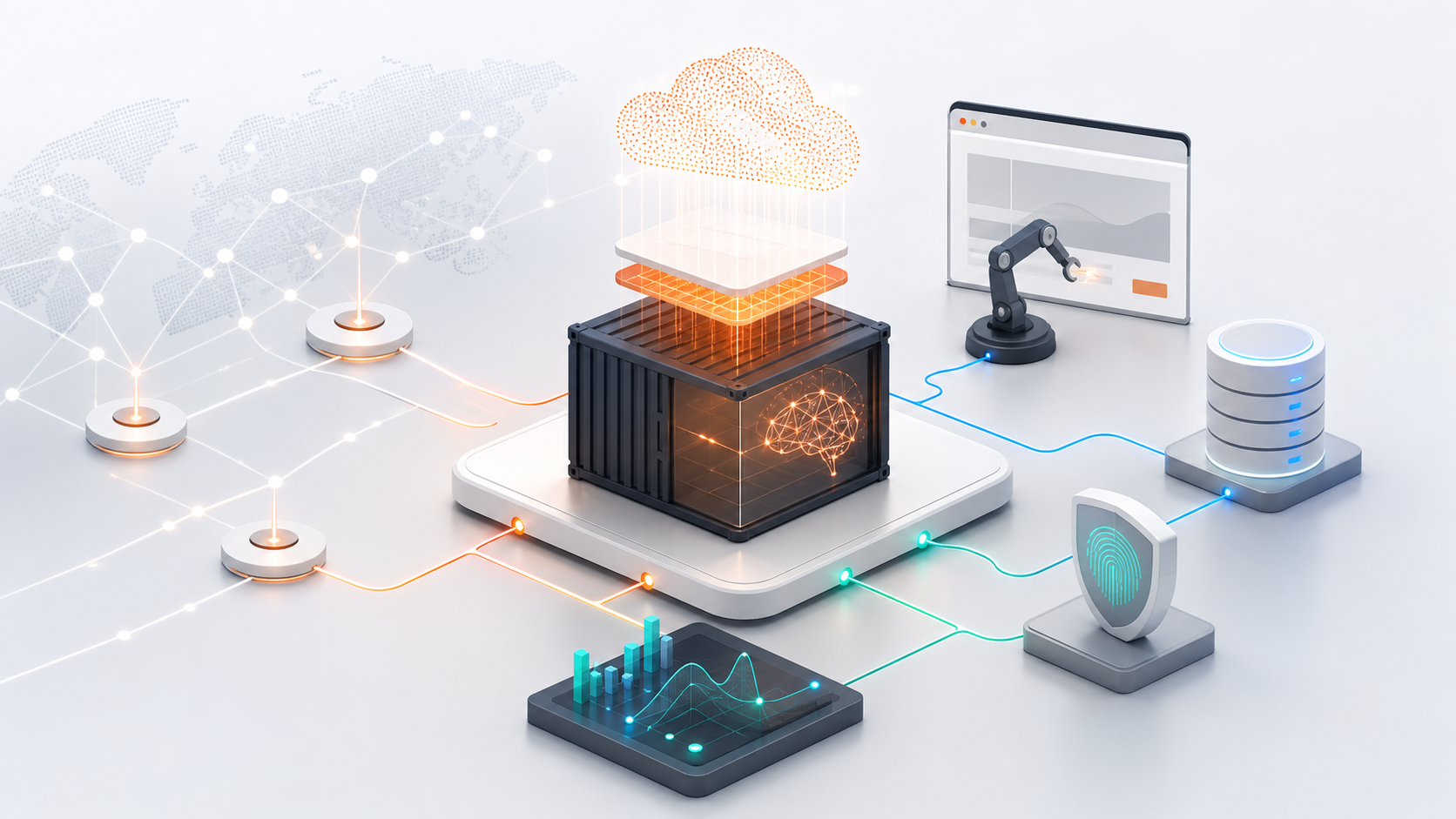
The OpenAI Agents SDK paired with Temporal gives you a production-ready foundation where LLMs handle reasoning and Temporal handles durability — auto-retries, crash recovery, and state persistence included. Without Temporal, 76% of real-world agent deployments fail. With it, your agent survives Kubernetes restarts, rate limits, and multi-hour workflows. Why 76% of AI Agents Fail in Production (And What the Data Tells Us) An analysis of 847 AI agent deployments in 2026 found that 76% failed in production, with 62% of those failures tied directly to authentication and state management issues — not model quality or prompt design. The math is brutal: an agent with 85% per-step success rate running 8 sequential steps has only a 27% end-to-end success rate. Every additional step compounds the failure probability, and long-running tasks make it worse. Research confirms that after 35 minutes of execution, every agent experiences measurable success rate degradation — and doubling the task duration quadruples the failure rate. Most developers build agents that work in notebooks and break in production because notebooks never handle crashes, partial completions, or mid-run restarts. The root problem is architectural: agents need a runtime that persists state, retries failures, and resumes from where they stopped. Temporal was designed exactly for this, and its March 2026 General Availability integration with the OpenAI Agents SDK makes the combination the production baseline for serious workloads. ...

June 10, 2026 · 17 min · baeseokjae
JetBrains Central Agentic Platform: Complete Early Access Guide 2026

JetBrains Central Agentic Platform: Complete Early Access Guide 2026

JetBrains Central is an enterprise-grade agentic platform that lets teams govern, orchestrate, and observe AI coding agents — Junie, Claude, Codex, Gemini CLI, and custom agents — from a single control plane. It launched Early Access in Q2 2026 with design partners including Google Cloud, Anthropic, and OpenAI. What Is JetBrains Central? The Agentic Platform Explained JetBrains Central is a managed infrastructure platform for agentic software development — it provides the governance layer, execution infrastructure, and semantic context that enterprise teams need to run AI coding agents reliably at scale. Unlike individual AI coding tools (Copilot, Cursor, Junie standalone), JetBrains Central is not an IDE plugin or a chat assistant. It is the control plane that sits above all those tools and coordinates their work across your development organization. Think of it as a Kubernetes for AI coding agents: it schedules workloads, enforces access policies, tracks costs to teams and projects, and surfaces logs so you know exactly what every agent did and why. The platform launched in Early Access on March 24, 2026, with design partners already including Google Cloud, Anthropic, and OpenAI — a signal that JetBrains is not building in isolation but is deeply integrated into the major AI provider ecosystems. For teams currently evaluating agentic engineering, JetBrains Central is the only solution in the JetBrains ecosystem that provides organization-level visibility into agent activity rather than per-developer fragmentation. ...

June 3, 2026 · 15 min · baeseokjae
JetBrains ACP Agent Registry: Connect AI Agents to Your IDE

JetBrains ACP Agent Registry: Connect AI Agents to Your IDE (2026 Guide)

The JetBrains ACP Agent Registry is a curated, one-click marketplace for AI coding agents inside IntelliJ IDEA, PyCharm, WebStorm, and other JetBrains IDEs. Launched January 28, 2026, it lets you install Claude Code, Cursor, Gemini CLI, and 30+ other agents in seconds — no manual JSON editing required. What Is the JetBrains ACP Agent Registry? The JetBrains ACP Agent Registry is the world’s first open, cross-editor AI agent marketplace, jointly built by JetBrains and Zed Industries and launched on January 28, 2026. It solves a problem that frustrated developers for years: every AI coding agent had its own proprietary installation process — download a binary, edit JSON config files, restart the IDE, repeat. The registry replaces that friction with a browser-like “one-click install” for any ACP-compatible agent directly inside IntelliJ IDEA, PyCharm, WebStorm, GoLand, and other JetBrains IDEs running version 2025.3 or later. As of mid-2026, the registry lists 30+ agents including Claude Code, Cursor, Gemini CLI, GitHub Copilot, OpenHands, Kimi CLI, Goose, Cline, and Koog (JetBrains’ own Junie agent). The registry is open — any developer or company can submit an ACP-compatible agent for inclusion. Both JetBrains and Zed share the same backend registry, meaning an agent listed there works in both editors without duplication. ...

June 2, 2026 · 14 min · baeseokjae
Salesforce Agentic Work Units (AWU) Explained for Developers

Salesforce Agentic Work Units (AWU) Explained for Developers

Salesforce의 AWU(Agentic Work Unit)는 AI 에이전트가 완료한 하나의 개별 작업을 의미합니다. 토큰이 AI가 얼마나 많이 “말했는지"를 측정한다면, AWU는 AI가 실제로 얼마나 많은 작업을 완료했는지를 측정합니다. 개발자에게 AWU는 Agentforce 비용을 이해하고 예측하며 최적화하는 핵심 단위입니다. What Are Salesforce Agentic Work Units (AWU)? An Agentic Work Unit is a discrete, measurable action completed by a Salesforce AI agent — one unit of work executed on behalf of a customer or employee, tracked independently of how many tokens that work consumed. Salesforce CEO Marc Benioff introduced the metric during the Q4 FY2026 earnings call on February 25, 2026, positioning AWUs as the industry-standard way to quantify AI agent productivity rather than raw token volume. As of Q1 FY2027, the platform has processed over 19 trillion AI tokens translating to 3.8 billion total AWUs, with 1.6 billion AWUs generated in a single quarter — a 111% quarter-over-quarter growth. The key insight for developers: AWU is elastic. Salesforce’s stated goal is to deliver more AWUs from fewer tokens as model efficiency improves, meaning the same budget should fund progressively more agent work over time. Whether that promise holds depends directly on how well you architect your agents. ...

June 2, 2026 · 17 min · baeseokjae
MCP Enterprise Adoption Guide 2026: 10,000+ Servers, Remote Deployment Best Practices

MCP Enterprise Adoption Guide 2026: 10,000+ Servers, Remote Deployment Best Practices

Model Context Protocol (MCP) crossed 10,000 active public servers in March 2026 and is now running in production at 78% of enterprise AI teams — making it the de facto standard for connecting AI agents to tools and data. This guide covers everything an engineering or platform team needs to deploy MCP securely at scale: architecture choices, OAuth 2.1 auth, gateway platforms, and the full remote deployment checklist. The 10,000-Server Milestone: Why MCP Has Become the Enterprise AI Standard MCP is no longer an experimental protocol — it is the enterprise AI integration standard for 2026. The public MCP server registry grew from 1,200 servers in Q1 2025 to over 10,000 active public servers by March 2026, a 7.8× year-over-year increase. SDK monthly downloads reached 97 million by March 2026, representing a 970× increase in just 18 months. These numbers signal an inflection point: MCP has achieved the critical mass that transforms a promising protocol into infrastructure you can build on confidently. ...

May 25, 2026 · 19 min · baeseokjae
Google ADK vs OpenAI Agents SDK vs Mastra: Agent Framework Showdown 2026

Google ADK vs OpenAI Agents SDK vs Mastra: Agent Framework Showdown 2026

You’re building an AI agent in 2026 and you’ve narrowed it down to three frameworks: Google ADK, OpenAI Agents SDK, and Mastra. They’re all production-ready, all well-documented, and all opinionated in ways that will either save you weeks or cost you weeks. After shipping agents with all three, here’s what actually separates them. The 2026 AI Agent Framework Trilemma: Google, OpenAI, or Open Source? The AI agent framework landscape reached a tipping point in 2026. The global AI agent market hit $7.84 billion in 2025 and is projected to reach $52.62 billion by 2030 at a 46.3% CAGR (Markets and Markets). Gartner predicts 40% of enterprise applications will embed task-specific AI agents by end of 2026 — up from less than 5% in 2025. Three frameworks now dominate serious production work: Google ADK (graduated to 1.0 GA, 8,200+ GitHub stars), OpenAI Agents SDK (launched early 2026, fast-growing), and Mastra (22,000+ GitHub stars, $13M seed round February 2026, 300k+ weekly npm downloads). Each reflects a fundamentally different philosophy about what an AI agent framework should do. Google ADK bets on interoperability and multimodal capabilities through native GCP integration and the Agent-to-Agent (A2A) protocol. OpenAI Agents SDK bets on opinionated guardrails and clean abstractions for OpenAI-native workloads. Mastra bets on TypeScript-first enterprise ergonomics and raw production performance. The framework you pick will shape your architecture for at least 18 months. Understanding the actual tradeoffs — not the marketing claims — is the only way to make the right call. ...

May 23, 2026 · 12 min · baeseokjae
GitHub Agent HQ Guide 2026: Run Claude, Copilot, and Codex from One Interface

GitHub Agent HQ Guide 2026: Run Claude, Copilot, and Codex from One Interface

GitHub Agent HQ is GitHub’s unified Mission Control interface that lets you assign issues to Claude, Copilot, and Codex agents side-by-side, compare their pull requests, and manage all AI coding sessions from one dashboard — no external subscriptions beyond your existing Copilot plan required. What Is GitHub Agent HQ? The Unified Mission Control for AI Coding Agents GitHub Agent HQ is a centralized orchestration layer within GitHub that allows development teams to deploy, monitor, and compare multiple AI coding agents — including GitHub Copilot (workspace agent), Anthropic Claude, and OpenAI Codex — from a single unified interface. Launched in late 2025 and expanded significantly in early 2026, Agent HQ represents GitHub’s shift from a single-agent assistant model to a vendor-neutral, multi-agent development platform. As of April 2026, available Claude models include Claude Sonnet 4.6, Claude Opus 4.6, Claude Sonnet 4.5, and Claude Opus 4.5; Codex options span GPT-5.2-Codex through GPT-5.4. Agent HQ is included with all GitHub Copilot plans — no separate marketplace purchases required. The platform supports github.com, VS Code, and GitHub Mobile, giving every developer on your team access to the same agent orchestration tools regardless of their preferred environment. The key value proposition: instead of context-switching between different AI tools with incompatible workflows, Agent HQ standardizes the entire agentic development cycle under GitHub’s existing issue and PR model. ...

May 22, 2026 · 13 min · baeseokjae
MCP v2.1 Server Cards: Auto-Discovery for AI Agent Tool Registries

MCP v2.1 Server Cards: Auto-Discovery for AI Agent Tool Registries (2026 Guide)

MCP v2.1 Server Cards are standardized JSON documents hosted at /.well-known/mcp/server-card.json that let AI clients like Claude and Cursor discover your server’s capabilities before making a single connection — no manual configuration required. If you’re running an MCP server in 2026 without one, you’re invisible to half the ecosystem. What Is an MCP Server Card and Why It Matters in 2026 An MCP Server Card is a machine-readable metadata document that describes an MCP server’s identity, transport options, available tool categories, authentication requirements, and capability flags — all served from a well-known URL path so any compliant AI client can discover the server automatically. Think of it as the robots.txt of AI tooling, except instead of telling crawlers what to ignore, it tells agents exactly what your server offers and how to connect. The specification is formalized in SEP-2127, a proposal submitted to the Model Context Protocol working group in early 2026. With 97 million monthly MCP SDK downloads as of January 2026, and more than 10,000 active public MCP servers now in the ecosystem, the discovery problem is acute: agents can’t reason about tools they don’t know exist. Server Cards solve this by decoupling tool discovery from tool execution — a client can read your server card, decide whether your tools are relevant, and only then initiate the full MCP handshake. Enterprise adoption is driving urgency: 78% of enterprise AI teams report at least one MCP-backed agent in production as of Q1 2026, up from 31% a year earlier. Without a standardized discovery layer, scaling that to hundreds of internal servers requires the kind of manual inventory that breaks under organizational velocity. ...

May 21, 2026 · 14 min · baeseokjae
OpenHarness: Universal Agent Harness for Any LLM

OpenHarness: Universal Agent Harness for Any LLM (2026 Review)

OpenHarness is an open-source, CLI-first agent runtime that lets you run autonomous AI agents against any LLM — Claude, GPT-5, Gemini, Ollama, or any OpenAI-compatible endpoint — without rewriting your harness each time you switch providers. As of April 2026, the HKUDS/OpenHarness project has 9,100 GitHub stars and ships 43+ built-in tools out of the box. What Is OpenHarness? (The Name Collision Problem Explained) OpenHarness refers to at least three distinct open-source projects that share the same name but solve the same fundamental problem: building a reusable execution layer that wraps an LLM and gives it tools, memory, permissions, and a structured agentic loop. The most prominent is HKUDS/OpenHarness (Hong Kong University of Data Science), a CLI-first runtime with 9,100 GitHub stars as of April 2026 and 43 built-in tools. A second project, AgentBoardTT/openharness, focuses on multi-provider SDK integration with explicit support for Claude, GPT, Gemini, and Ollama under a unified auth model. A third lives at OpenHarness.ai and emphasizes harness interoperability. Despite the naming confusion, all three projects share the same philosophical root: Agent = Model + Harness. The model provides intelligence; the harness provides everything else — tools, memory, lifecycle hooks, permissions, and observability. In a market projected to grow from $8.29 billion in 2025 to $12.06 billion in 2026 at a CAGR of 45.5%, building vendor-agnostic harnesses is becoming the defining engineering challenge of the AI era. Understanding which “OpenHarness” you’re working with is the first step. ...

May 20, 2026 · 14 min · baeseokjae
MemPalace Review 2026: The Highest-Scoring Free AI Memory System for Agents

MemPalace Review 2026: The Highest-Scoring Free AI Memory System for Agents

MemPalace is an open-source AI memory framework that scored 96.6% on the LongMemEval benchmark — the highest result ever recorded by a free, self-hosted memory system. It launched on April 5, 2026, gained 23,000+ GitHub stars within 48 hours, and now powers persistent memory for thousands of Claude Code, LangChain, and custom agent deployments. This review covers how it works, what the benchmark score actually means, how to set it up in five minutes, and when to pick a paid alternative instead. ...

May 19, 2026 · 14 min · baeseokjae